
Published on: 2026-01-24 | Written by: Dr. Yasser Al-Hawari, Tulip Dental Center
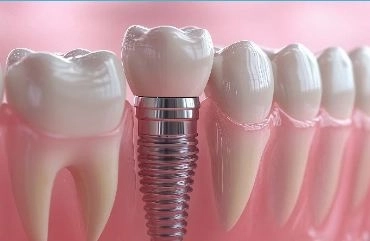
Dental implants are one of the most advanced and important developments in oral and dental surgery. They represent the closest solution to natural teeth in terms of appearance and function, helping patients regain their ability to chew and speak confidently, while maintaining jawbone health in the long term.
Dr. Yasser El-Hawary explains that dental implants are a medical procedure in which missing teeth are replaced with biocompatible implants fixed into the jawbone. A dental crown is then placed on top of the implant, restoring the natural function and appearance of the tooth.
Dr. Yasser El-Hawary stresses that missing teeth, if left untreated, can lead to jawbone resorption and shifting of adjacent teeth, causing functional and aesthetic issues. Dental implants, on the other hand, help maintain bone density and stabilize surrounding teeth.
Dr. Yasser El-Hawary confirms that dental implants are suitable for most patients who have lost one or more teeth, provided there is sufficient bone density and overall good health. He also warns that a thorough pre-procedure evaluation is crucial for the success of the implant.
Dr. Yasser El-Hawary explains that technological advancements in dental implantology have significantly increased success rates. Modern techniques include:
Digital implant planning using 3D imaging.
Minimally invasive or flapless implant placement.
Immediate implants following tooth extraction.
High-quality German implant systems.
Dr. Yasser El-Hawary warns that dental implant placement involves several precise steps, starting with a full examination and radiographic imaging, accurate planning of implant position, placement into the jawbone, and finally, the attachment of a crown to ensure stability and patient comfort.
Dr. Yasser El-Hawary stresses that dental implants outperform conventional bridges and dentures because they:
Do not affect adjacent teeth.
Provide excellent stability.
Last for many years.
Preserve jawbone health.
Offer a natural-looking smile.
Dr. Yasser El-Hawary explains that dental implants are performed under local anesthesia, so the patient does not feel pain during the procedure. He also warns that following post-operative instructions minimizes any mild discomfort afterward.
Dr. Yasser El-Hawary warns patients to maintain oral hygiene, avoid pressure on the implant in the first few days, and attend regular follow-ups to ensure proper bone healing and long-term success of the implant.
Dr. Yasser El-Hawary stresses that delaying the replacement of missing teeth may lead to jawbone deterioration, making future implants more complicated and sometimes requiring bone grafting before implantation.